
I joined WeWork in 2017, at a point when the company was already large enough to feel inevitable but still young enough to feel personal. I didn't join because of a valuation story or because of a charismatic founder. I joined because the product solved a real problem in a way that felt obvious once you saw it.
Work had already changed. Real estate just hadn't caught up.
Traditional offices assumed permanence—long leases, fixed footprints, heavy upfront commitments—at precisely the moment when companies were becoming smaller, faster, and more experimental. WeWork removed that friction. It allowed people to start, scale, contract, and rethink without the psychological weight of permanence. It wasn't just desks and walls. It was optionality.

When I reflect on my tenure, I keep returning to the numbers, not to glorify scale, but to anchor the story in reality. At its peak, WeWork operated 781 locations globally and served approximately 664,000 members. Those figures weren't abstract. They represented responsibility. Each building had to work. Each member had expectations. Each employee carried a piece of an enormously complex system that needed to function every single day.
I still believe in the product because I saw what happened inside those buildings. I saw companies form, partnerships emerge, careers pivot, and confidence grow. What I didn't see—at least not at first—was how fragile the internal system supporting all of that actually was.
That fragility didn't announce itself loudly. It accumulated quietly.
The Rocketship
By the time I arrived, WeWork already felt like it was moving too fast to fully observe itself. Growth was relentless. Buildings opened across cities and continents in rapid succession. Teams learned by doing because there wasn't time to formalize learning any other way.
There was pride in that chaos. People worked long hours not because they were told to, but because it felt like something consequential was happening and no one wanted to be the bottleneck. You learned faster than you would anywhere else, partly because mistakes were visible and partly because responsibility was unavoidable.
As headcount surged—eventually climbing past 10,000 employees—the same qualities that powered growth began to strain the system. Early employees had built muscle memory through repetition and intuition. As more experienced corporate leaders were brought in, structure followed. In theory, this was maturation. In practice, it created a cultural fault line.
The early builders worried structure would slow momentum and dilute what made the company special. The newcomers worried the absence of structure would eventually cause the whole thing to collapse. Both sides were reacting rationally to what they saw. What was missing was a shared language to reconcile those views.
Instead, tension settled in quietly—inside meetings where decisions felt misaligned, in priorities that shifted without explanation, and in a growing sense that the company was outrunning its ability to coordinate itself.
That tension became the background hum of daily life.
Adam & the Executive Team
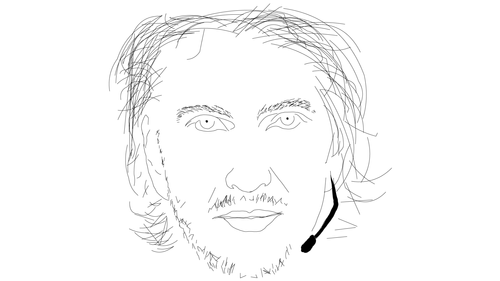
Adam's presence was impossible to separate from the company. He had gravity. When he entered a room, energy shifted. Ideas gained or lost momentum not solely on merit, but on proximity to him. At times, this made WeWork feel unstoppable. Decisions happened fast. Constraints dissolved.
But scale changes the cost of unpredictability.
As the organization grew, leadership felt increasingly distant from execution. Titles inflated. Roles blurred. Accountability became harder to trace. Big symbolic moments—launches, speeches, celebrations—became more visible than the slow, difficult work of operational discipline.
This distance wasn't immediately destabilizing. During periods of growth, it felt tolerable, even exciting. But it created a gap between leadership experience and workforce experience that would later widen under pressure.
That gap mattered most when communication faltered.
Yes, We Partied
The parties were real. Summer Camp. Big-name performers. Lavish events. For a time, they were symbols of success—moments when the company celebrated itself and the people building it.
But even then, opinions were mixed. Some saw these moments as necessary pressure valves in an intense environment. Others quietly questioned the optics and the cost. As scrutiny increased, those questions grew louder. What once felt like culture began to feel like excess.
The parties weren't the problem. What they represented—a lack of constraint—eventually was.
One Email Can Change Everything
In October 2018, a company-wide email went out addressing a sensitive legal issue. On paper, it was meant to reassure and close ranks. In reality, it exposed how fragile trust already was.
The tone landed poorly. Slack channels lit up almost immediately. Conversations shifted. What had been quiet unease became visible skepticism. This wasn't the moment trust broke—but it was the moment many people realized how thin it had become.
From that point forward, every message carried more weight. Every decision was interpreted through a more critical lens. The organization kept moving, but the emotional certainty that had powered it began to drain.
That internal shift coincided with a much louder external one.
The S-1 Period
When WeWork filed its S-1 on August 14th, 2019—exactly two years after I joined—it was meant to be a milestone. Instead, it became an inflection point that exposed how misaligned perception and reality had become.
The scrutiny was immediate and intense. Governance, leadership behavior, and financial sustainability were dissected publicly. The company that had once been celebrated was now framed as a cautionary tale almost overnight.
Internally, the effect was destabilizing. Work didn't slow down, but confidence did. Meetings changed texture. People spoke more carefully. Assumptions that had once felt solid were suddenly phrased as questions. Teams continued executing because there was no alternative, but the belief that had once animated that execution began to thin.
It wasn't just the valuation discussion. It was the realization that the public narrative had slipped beyond our control. Years of work were being compressed into headlines that didn't reflect how the company actually functioned day to day. We were still opening buildings. Still onboarding members. Still solving operational problems at scale. But externally, none of that mattered anymore.
When Adam was ousted shortly afterward, uncertainty deepened. Leadership transitions are destabilizing even in calm environments. In a company already running hot, the sudden absence of its gravitational center created a vacuum that people instinctively tried to fill—sometimes with optimism, sometimes with fear, often with silence.
The weeks between the S-1 filing and October 3rd felt suspended. We were still moving forward, but no one could say with confidence where "forward" actually led.
October 3rd
At 10:00 a.m. on October 3rd, 2019, the company gathered for an all-hands meeting that remains unusually vivid in my memory.
The room felt heavy before anyone spoke. People arrived early. Conversations were muted. There was less casual laughter, fewer phones out. The familiar hum of confidence—the low-level noise of a company used to winning—simply wasn't there.
Miguel spoke first. He walked through the company's journey from early scrappiness to a global organization with more than 10,000 employees and hundreds of locations. But the tone wasn't celebratory. It felt reflective, almost elegiac. The way he spoke signaled that something had ended, even if no one said it aloud.
Then Marcelo Claure took the stage.
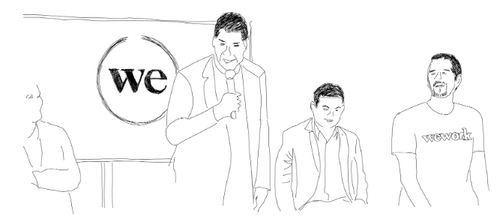
What stayed with me wasn't just the announcement—though the numbers mattered. An additional $4 billion from SoftBank, bringing total investment to over $18 billion, was significant. What mattered more was the tone. Marcelo didn't posture. He didn't promise a return to glory. He spoke like someone who understood that the room didn't need inspiration. It needed grounding.
He talked about fundamentals. About stabilizing the business. About focusing on what actually worked and being honest about what didn't. There was no applause when he finished. But there was a collective release of tension. You could feel people breathe again.
That moment didn't restore confidence. It restored coherence. For the first time in months, leadership and internal reality felt aligned.
And that alignment created space—not for relief, but for work.
Getting Ready
The weeks after October 3rd were not dramatic. They were relentless.
Data requests multiplied. Metrics that had once been directional became mandatory. Assumptions that had lived comfortably for years were interrogated line by line. Teams accustomed to autonomy were pulled into centralized review.
This wasn't framed as punishment, but it felt invasive. People who had built systems through intuition now had to defend them analytically. Processes that worked in practice but lacked documentation were treated with suspicion. Long-standing workarounds—things everyone knew but no one had formalized—were exposed.
What became painfully clear was how uneven the organization was. Some parts of the business were remarkably disciplined. Others relied almost entirely on institutional memory and heroic effort. That imbalance hadn't mattered during hypergrowth. It became impossible to ignore under scrutiny.
The 4-Part Turnaround Plan
By the time November 22nd, 2019 arrived, the company wasn't looking for inspiration anymore. We'd had plenty of that. What we needed was something steadier: a plan that could survive scrutiny, fatigue, and the loss of momentum without collapsing under the weight of its own rhetoric.
When Marcelo outlined the four-part turnaround plan — growth, financial discipline, ways of working, and clarity of identity — it landed differently from the visions that had come before. There was no soaring language about changing the world, no attempt to resurrect the mythology. Instead, it felt like someone turning on the lights after a long night.
That was the point.
The problem wasn't ambition. It was the cost of unbounded ambition. Hypergrowth had allowed us to patch inefficiency with effort, fund complexity with capital, and postpone hard decisions. Once scrutiny became constant, those habits stopped working. The plan assumed the past had consequences — and that we now had to live inside them.
1. Growth
Growth had once been reflexive. We opened buildings because momentum demanded it. Expansion was identity. Under the turnaround, growth became conditional. Not "grow because we can," but "grow where it works."
This was a quieter, more selective definition of success. It forced the company to acknowledge that speed alone was no longer a virtue. Slowing down felt emotionally like failure, even when it was strategically correct. But the shift mattered. Growth was no longer proof of belief; it was a decision that had to earn its place.
2. Financial Discipline
The second pillar was where the plan became unmistakably pragmatic. Financial discipline meant abandoning scale as a proxy for success and replacing it with sustainability as a baseline requirement. Central to this shift was a deceptively simple idea: each building would be treated as its own business.
That reframed everything. You could no longer hide behind aggregate numbers. Weak locations couldn't be masked by strong ones. Profitability had to be measured granularly — occupancy, churn, cost structure, contribution margin — building by building.
This wasn't just accountability; it was specificity. And specificity is unforgiving. Once you start measuring at that level, you stop telling stories and start naming realities. You see which buildings work, which don't, and how much of the system is being carried by a smaller subset of healthy assets.
This is what made the moment a reckoning rather than a reinvention.
3. Ways of Working
The third pillar acknowledged that the organization couldn't execute a turnaround using the same habits that had produced the problem. In hypergrowth, informal networks, urgency, and heroic effort carry you. Eventually, that model collapses under its own weight.
"Ways of working" meant fewer heroics and more systems. Clear ownership. Clear decision rights. Better information flow. Less reactive thrash. It was an attempt to replace personality-driven execution with repeatable discipline.
But this shift had emotional consequences. People who had built their identity around agility sometimes felt constrained. Those who had relied on ambiguity found themselves exposed. Process became protection — against chaos, against burnout, against misaligned priorities — but it also felt like a loss for those who loved the messier version of the company.
4. Clarity of Identity
The fourth pillar was the most subtle and, in many ways, the most important. By late 2019, we weren't just struggling with performance — we were struggling with coherence. Were we a real estate company, a tech company, a hospitality company, a membership network?
Early on, that ambiguity was energizing. Under scrutiny, it became a liability.
Clarity of identity wasn't branding; it was alignment. It gave the organization a stable narrative that could guide decisions, narrow focus, and justify saying no. When you know who you are, you can cut projects that don't belong. You can reduce complexity. You can stop chasing ideas that are exciting but nonessential.
Execution is where all of this became real.
Execution meant cutting projects people loved, questioning long-standing practices, and introducing constraint into a culture shaped by abundance. Some people adapted quickly — often those who had been quietly frustrated by the lack of discipline. Others struggled, not because they lacked ability, but because the rules had changed. And many were simply exhausted.
By November 2019, the workforce had already endured months of instability — the S-1 scrutiny, leadership upheaval, and constant uncertainty. Turnarounds demand endurance as much as intelligence, and endurance is not infinite.
What made the four-part plan matter wasn't brilliance. It was durability. It didn't depend on charisma or belief. It depended on consistent, difficult choices guided by clearer priorities.
It didn't promise a return to the old story.
It offered something harder, and ultimately more useful: a way forward that could survive reality.
Punch in the Mouth
In early 2020, COVID-19 hit, and every plan became provisional overnight.
Offices emptied. Demand collapsed. The core asset of the business—physical space—became a liability. Long-term planning evaporated. Strategies were rewritten weekly. Survival replaced optimization.
No turnaround playbook prepares you for a global pandemic.
The emotional impact inside the company was profound. Teams focused inward, protecting what they could. Long-term identity questions were shelved in favor of immediate survival. When Marcelo departed in early 2022, the leadership vacuum compounded the instability. In an environment already defined by fragility, the absence of a stabilizing figure was deeply felt.
And yet, people kept showing up.
That's the part most narratives miss. Even as confidence wavered and plans dissolved, thousands of employees continued to support members, manage buildings, and hold together an enormously complex operation under conditions no one had prepared for.
Why the Full Story Matters
When I began writing these reflections in December 2024, my goal wasn't defense or nostalgia. It was accuracy.
The dominant narrative reduced WeWork to caricature. That version erases the people who built real things, learned hard lessons, and carried extraordinary responsibility under relentless scrutiny.
This wasn't a fairy tale.
It wasn't a scam.
It was a very human attempt to scale something meaningful faster than its foundations could support.
For those of us inside it, it wasn't a headline.
It was years of our lives.
That is why the full story matters.